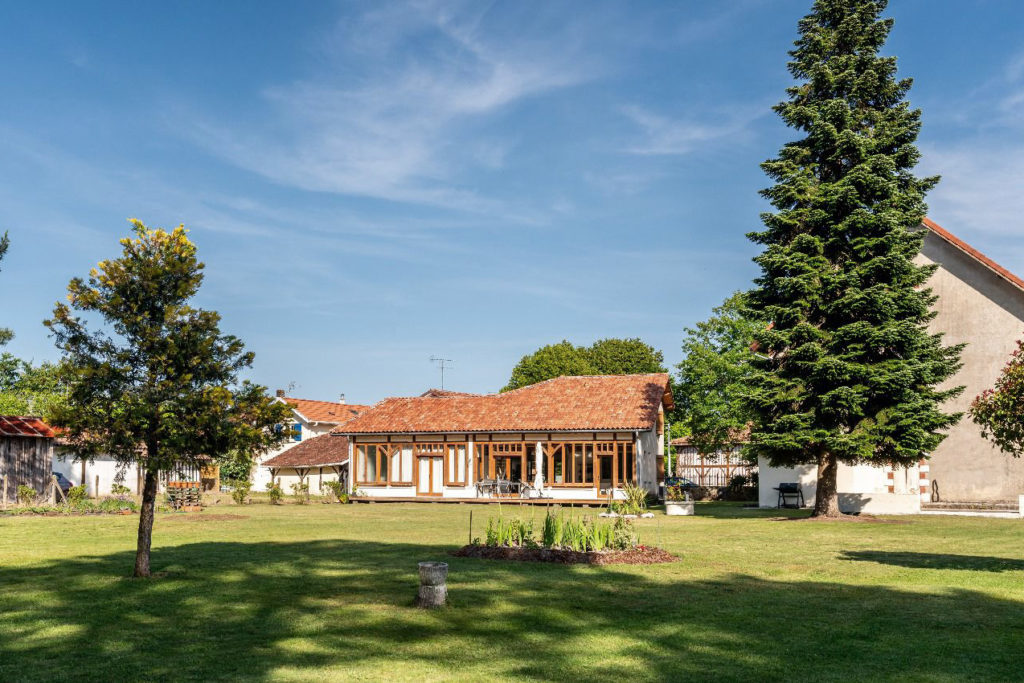
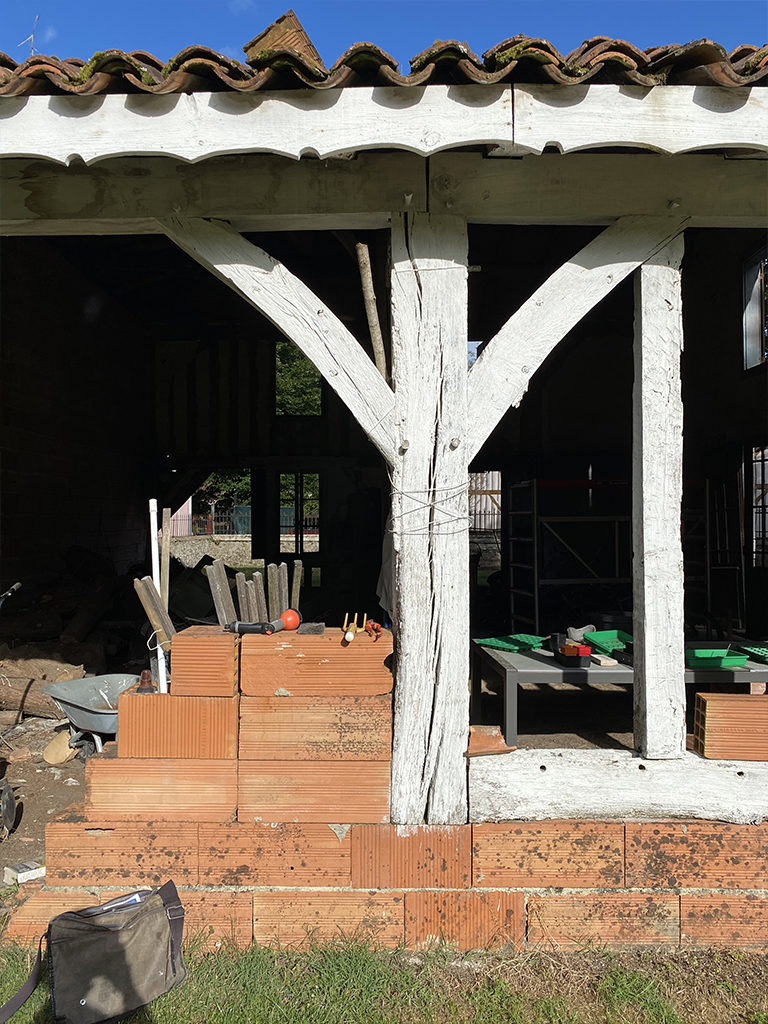
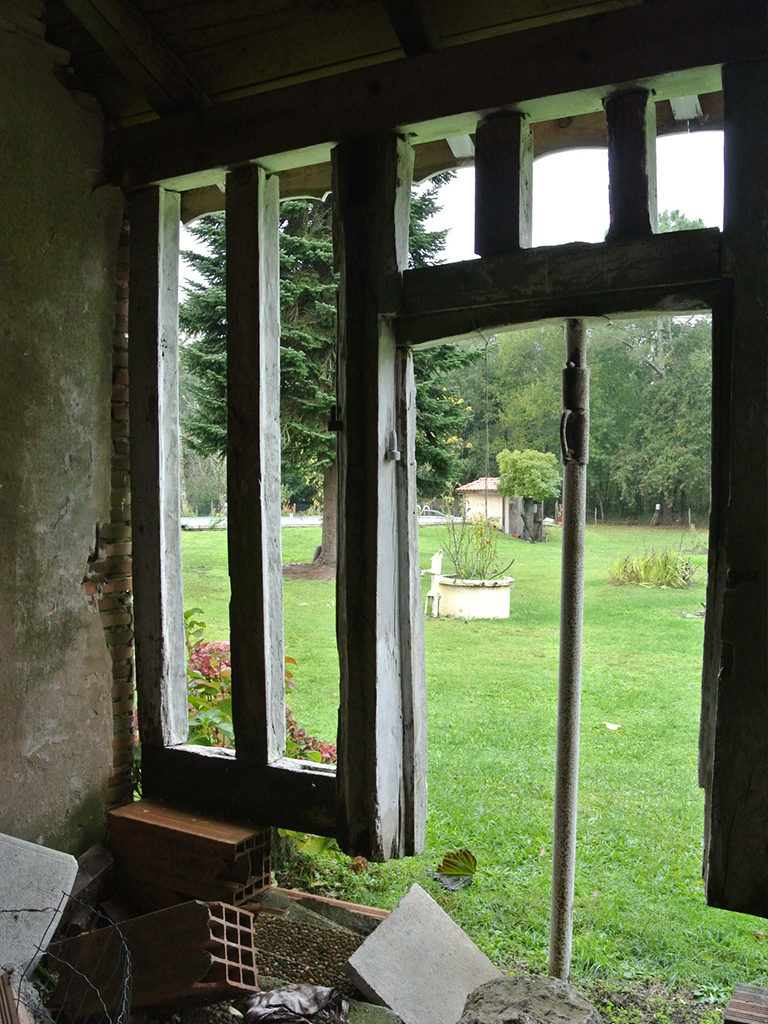
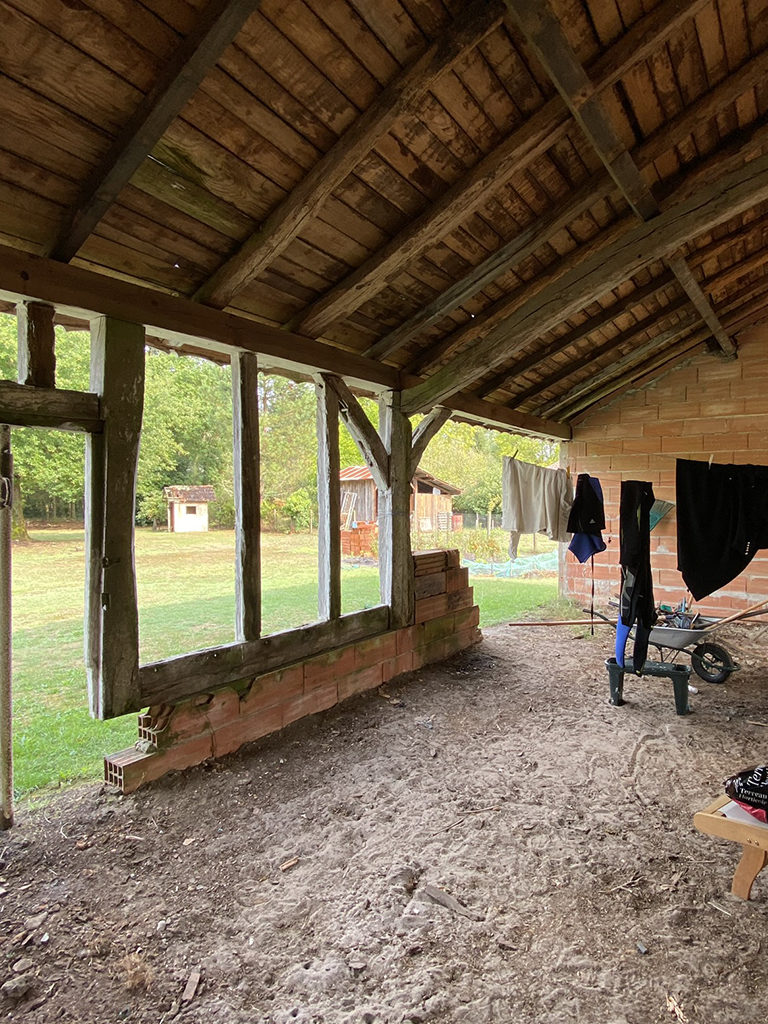
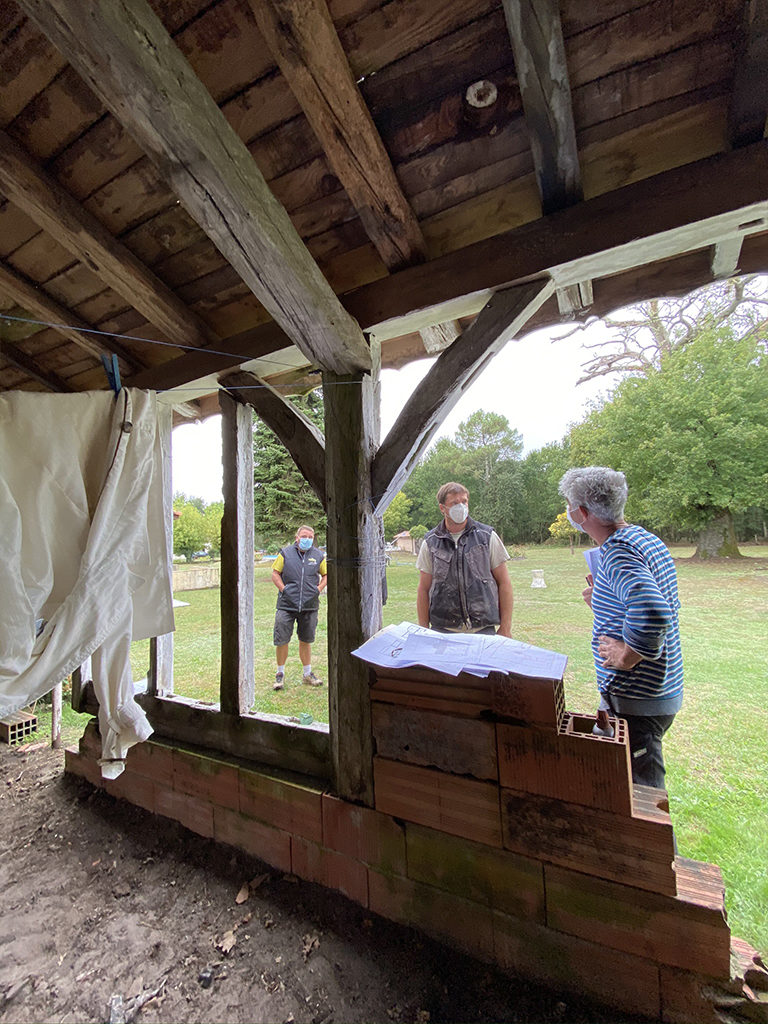
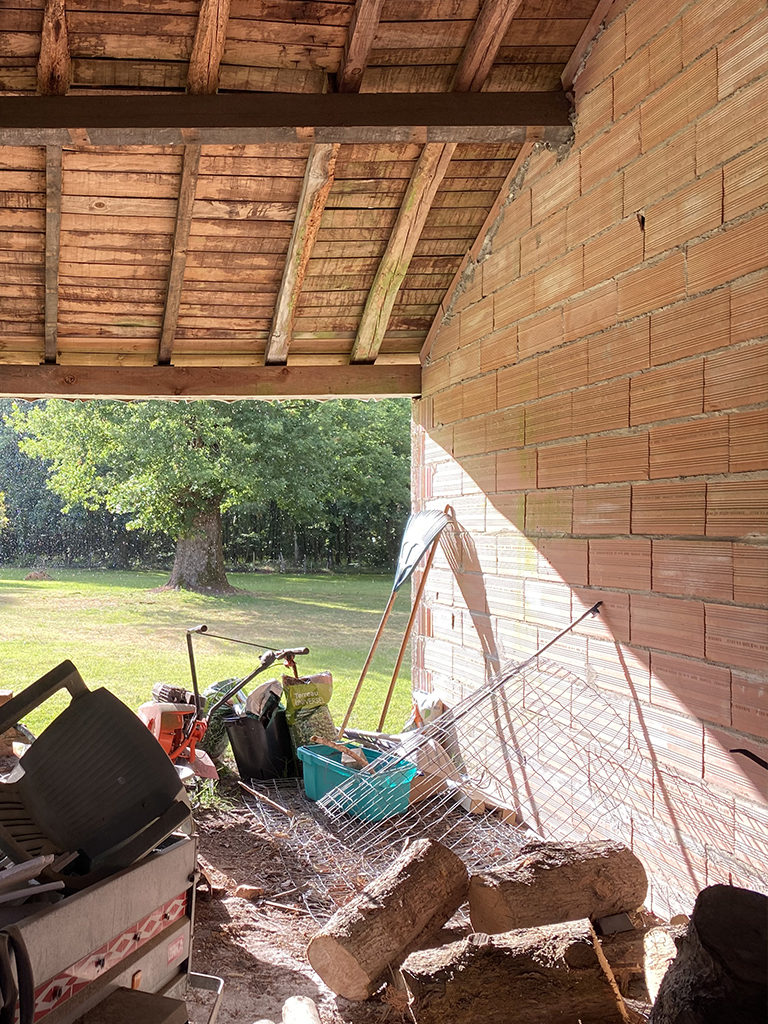
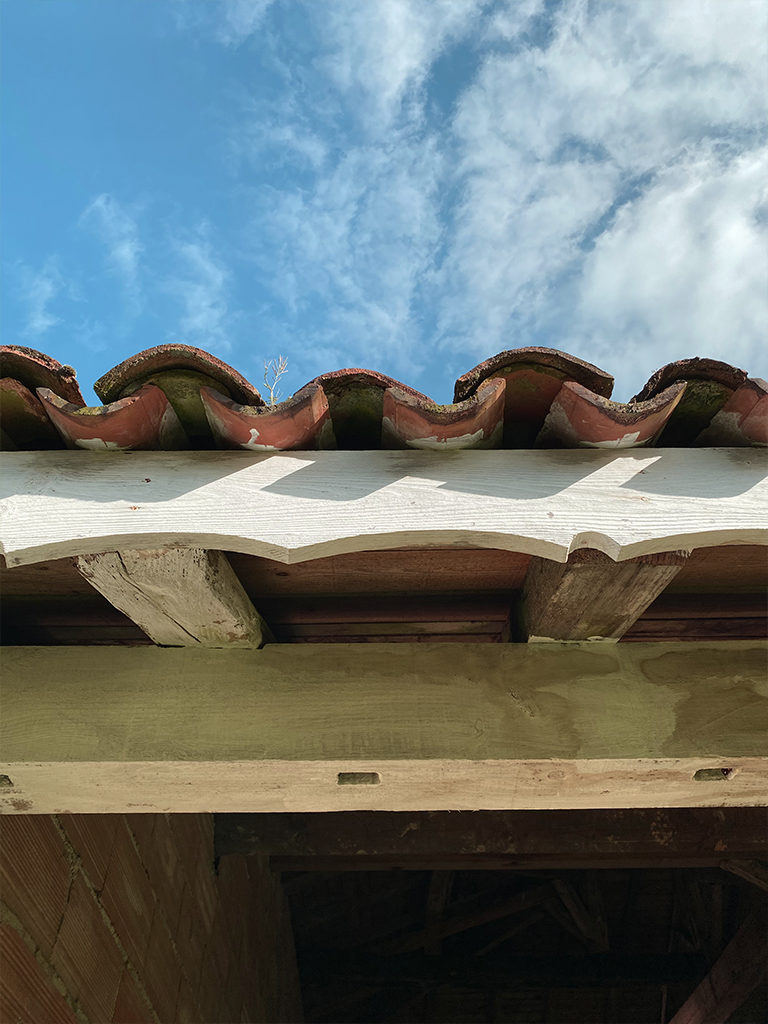
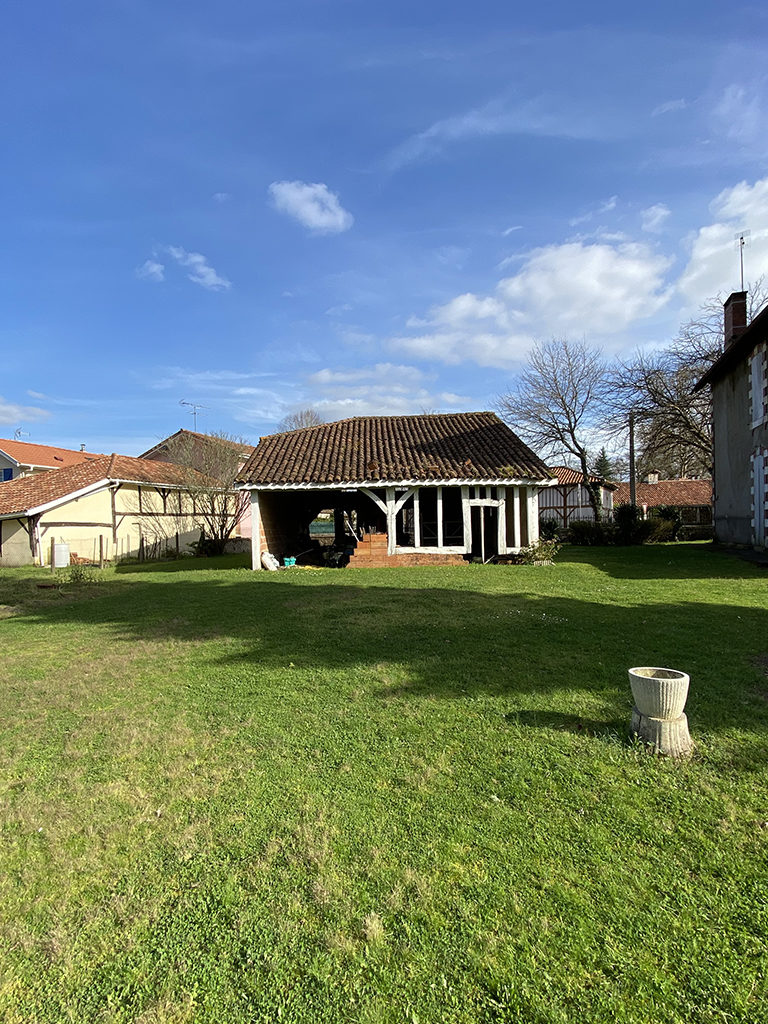
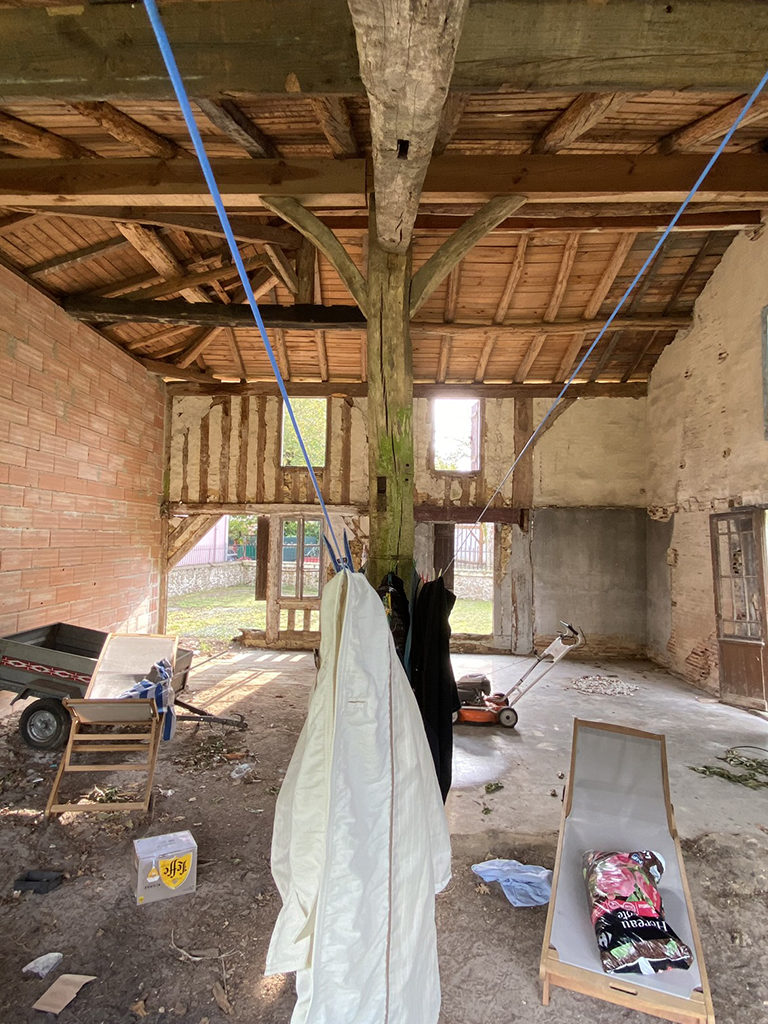
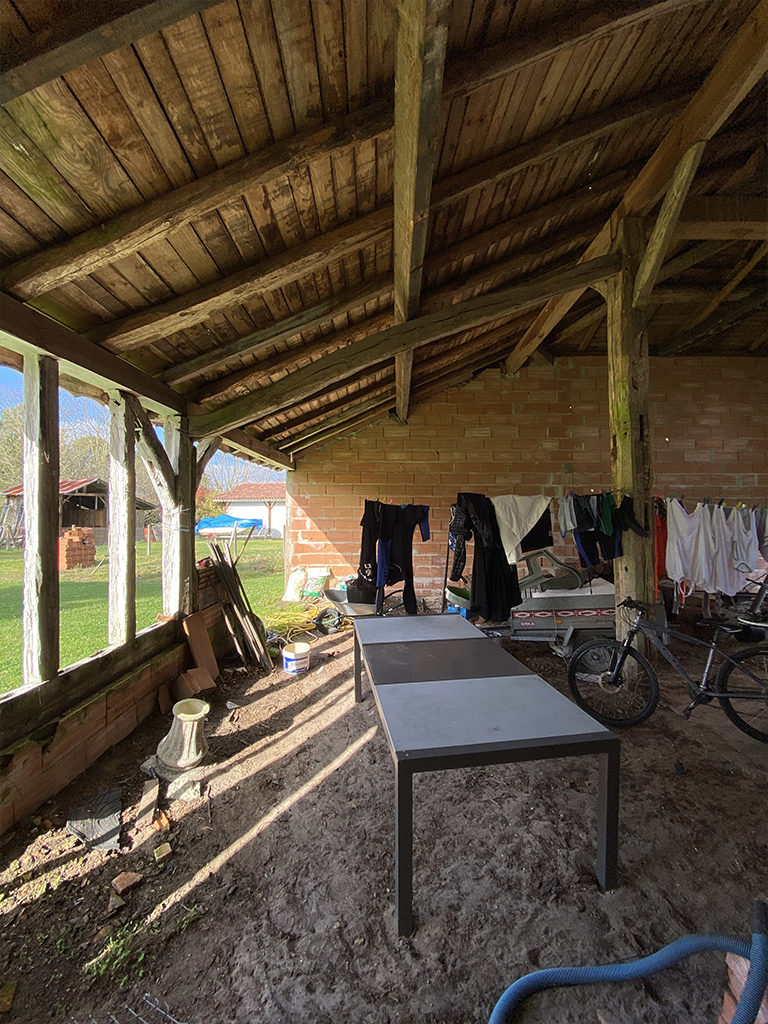
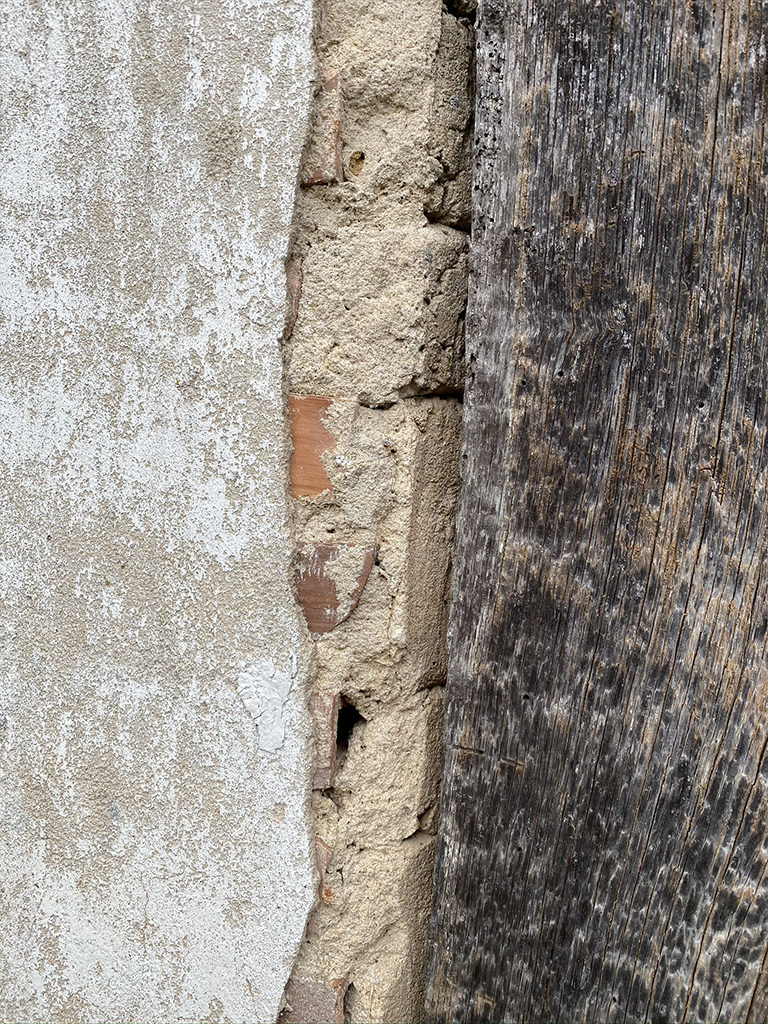
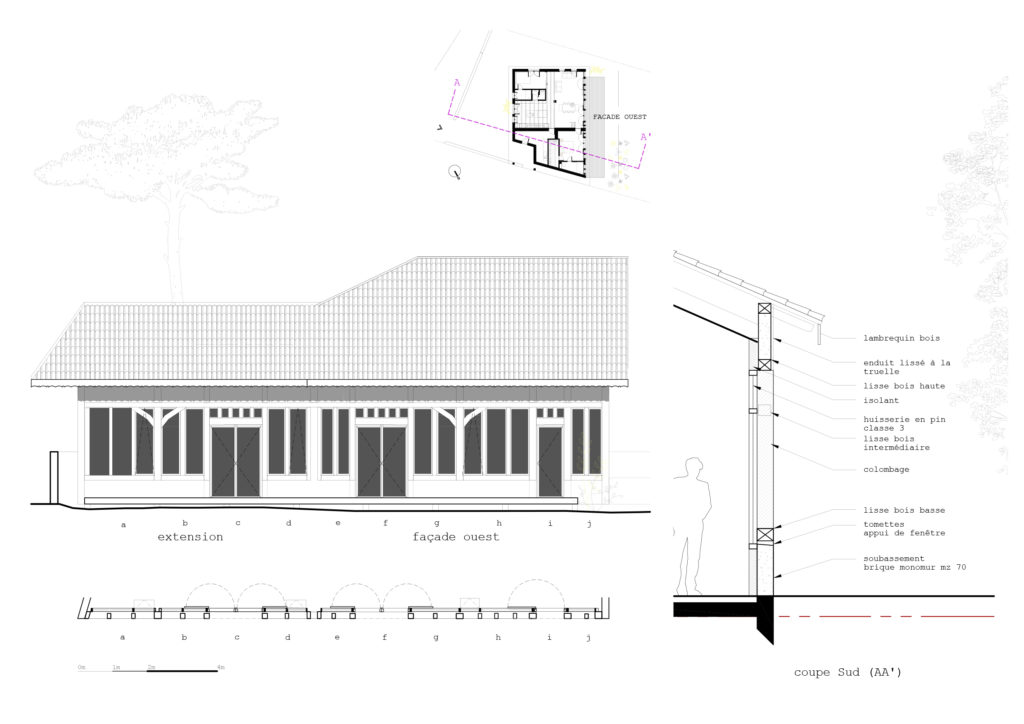
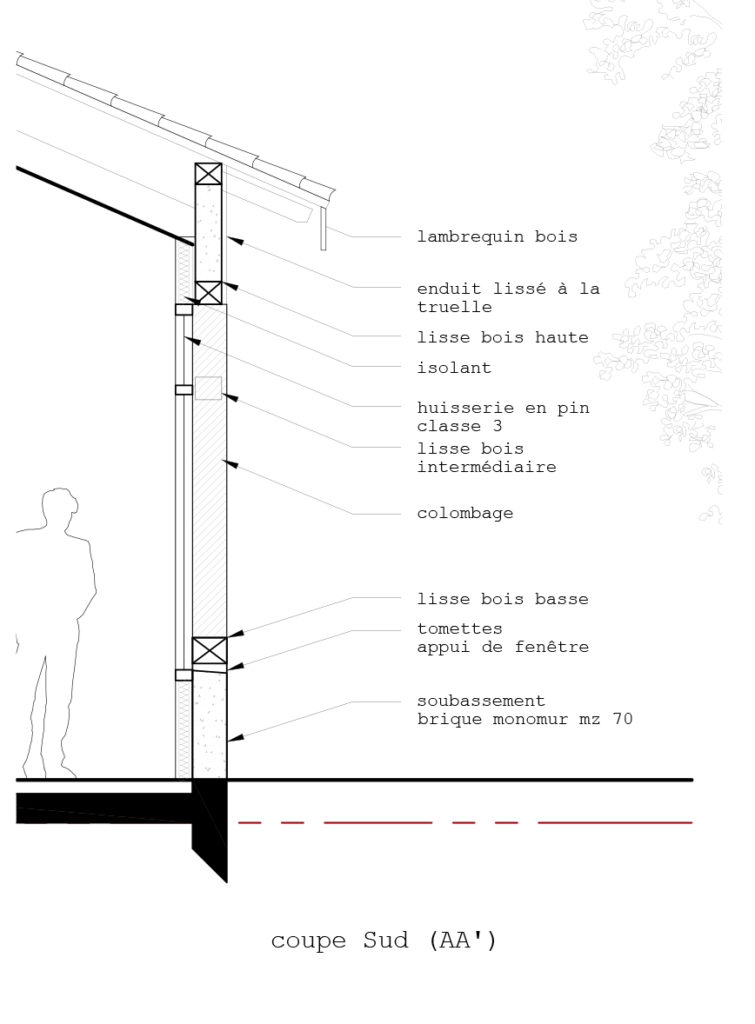
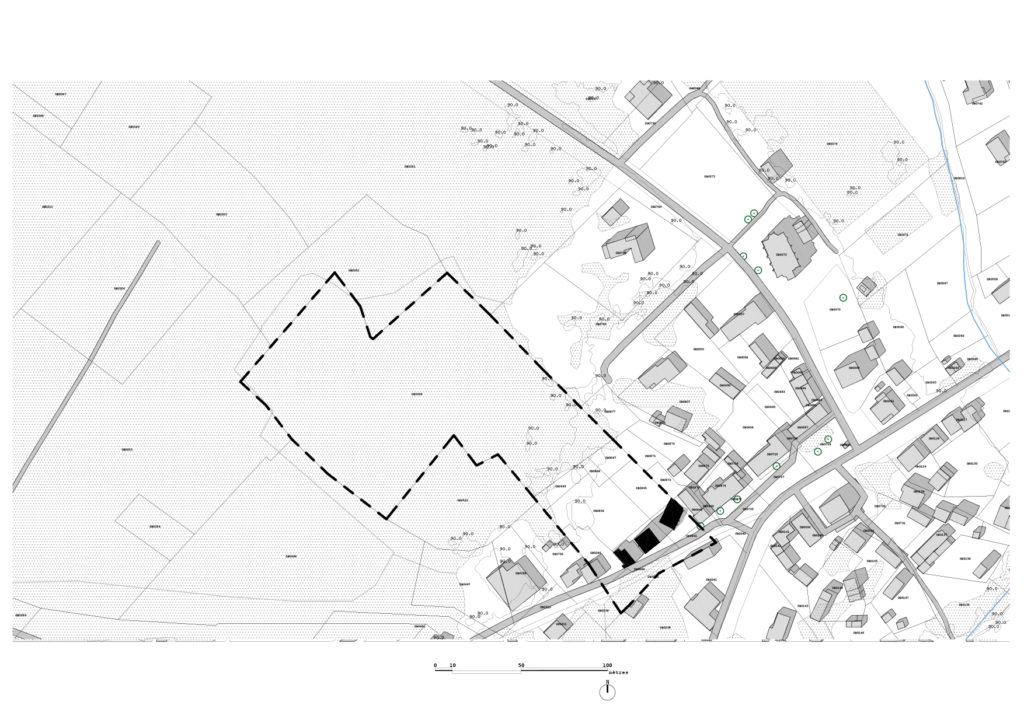
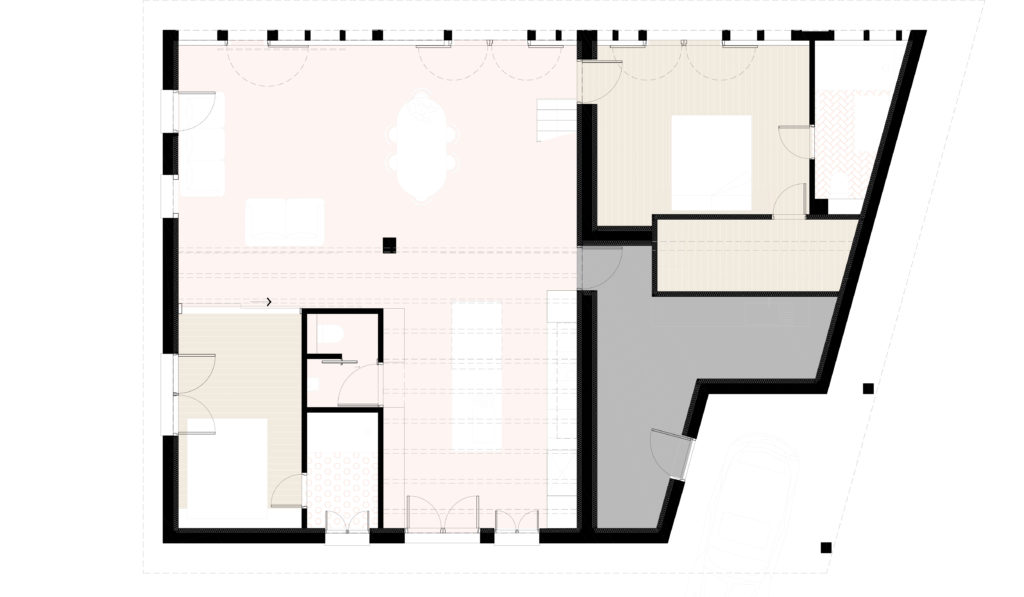
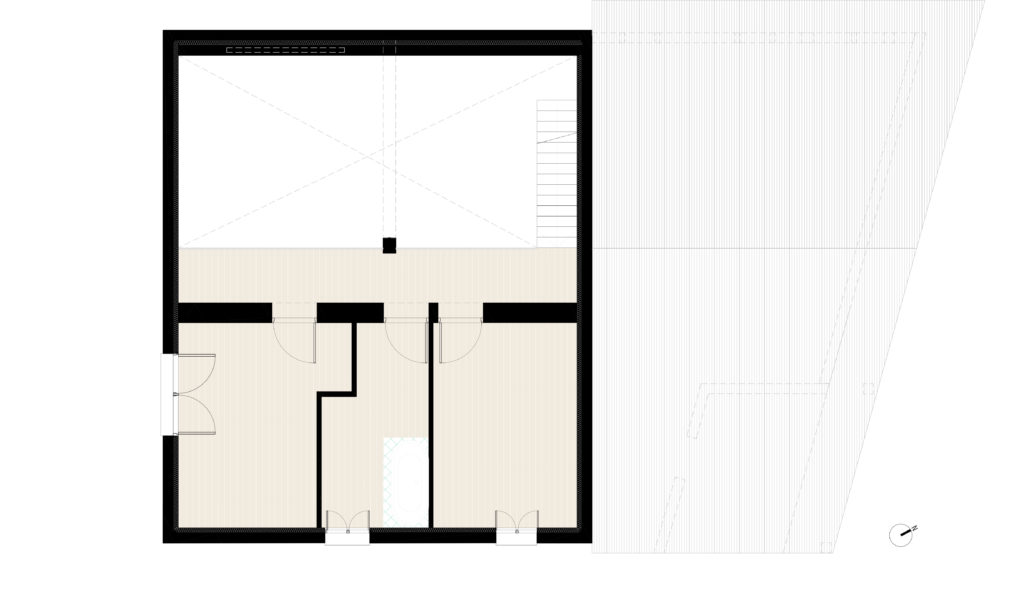
Le projet de rénovation et d’extension de cette bâtisse est partie d’une envie forte de préserver notre patrimoine landais. L’airial possède trois bâtisses. Celle-ci était la plus dégradée. On y voyait les traces d’un ancien escalier qui menait à l’étage, des ouvertures entre les colombages et du remplissage de l’époque à la chaux qui tenait encore à deux bouts de bois.
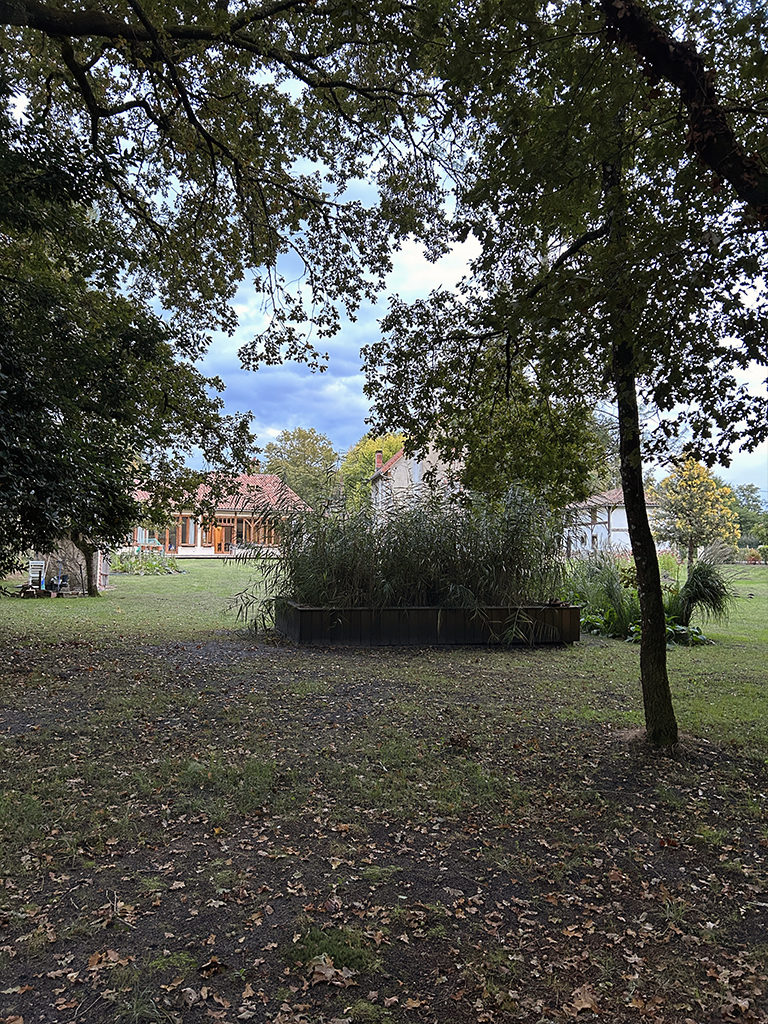
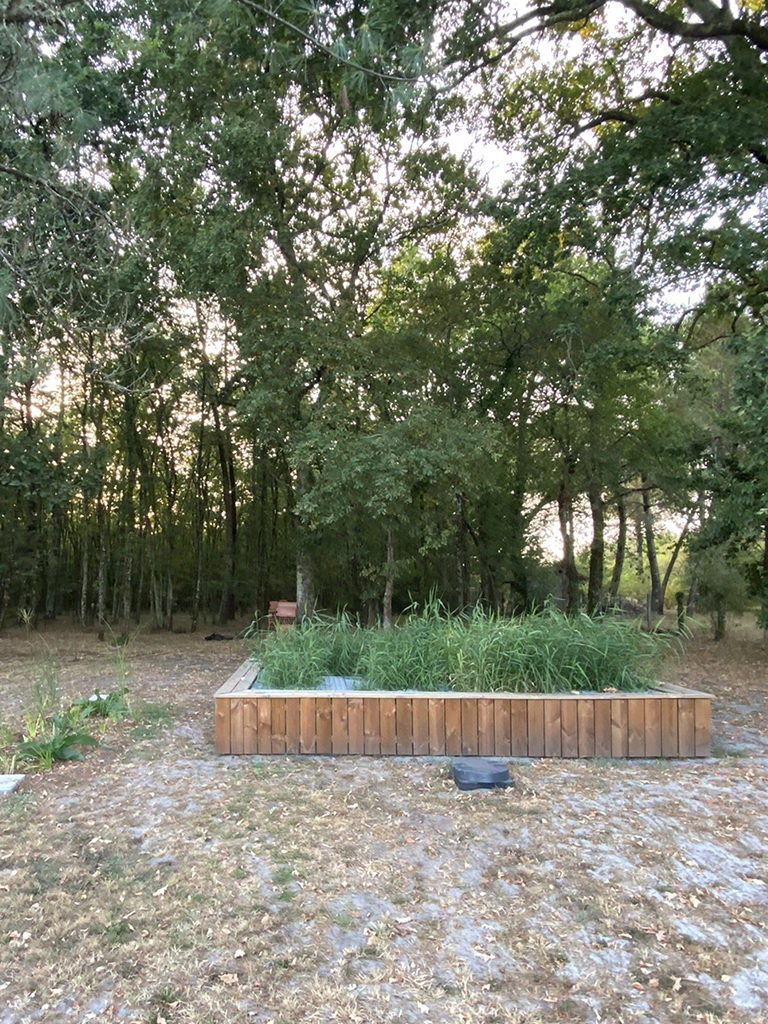
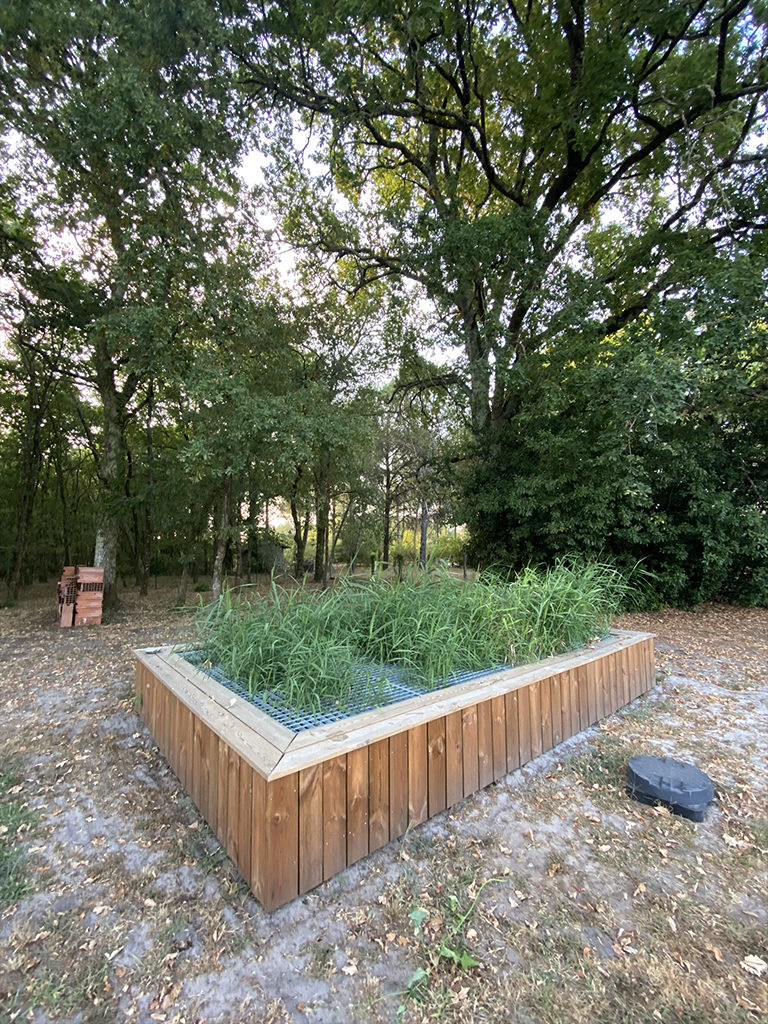
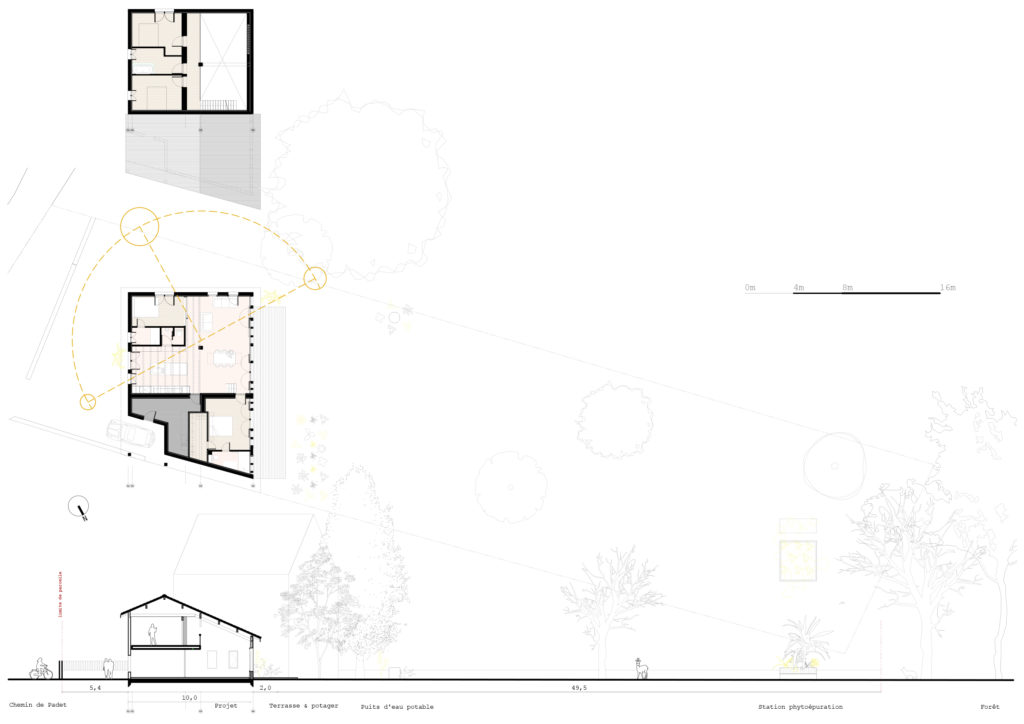
Il n’y avait aucun système d’évacuation des eaux usées, il a fallu concevoir un système individuel. Nous avons choisi la station de phyto épuration, un moyen écologique très fonctionnel qui filtre à travers différents bassin et des roseaux les eaux usées. Cette station d’épuration individuelle vient remplacer les anciennes microstation d’épuration individuelle de manière écologique, naturelle et végétale, ne produisant aucune odeur désagréable mais plutôt un joli paysage.
L’ensemble a été repris minutieusement afin de ne pas dénaturer cette élégance entre chaque proportion et matériaux.
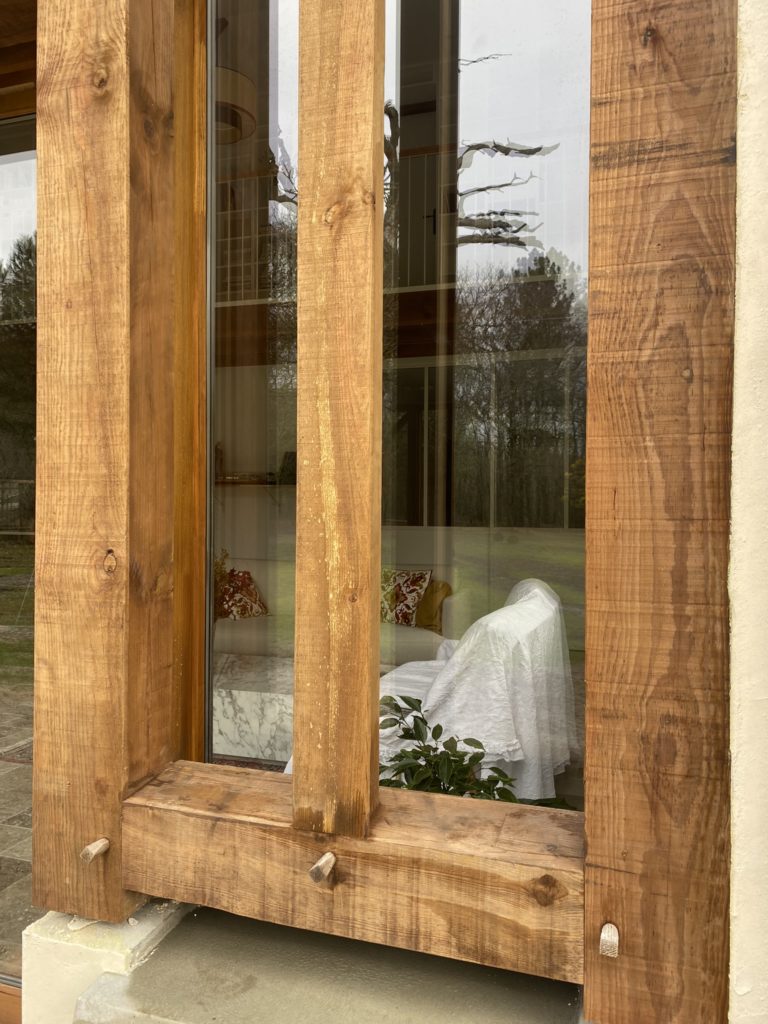
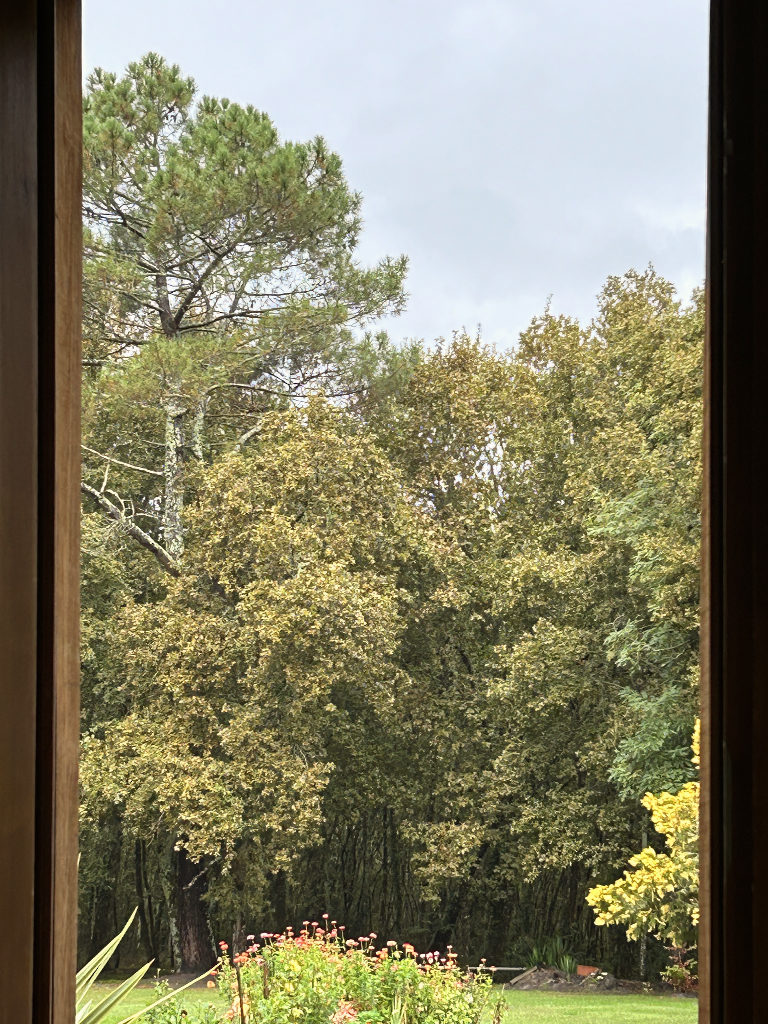
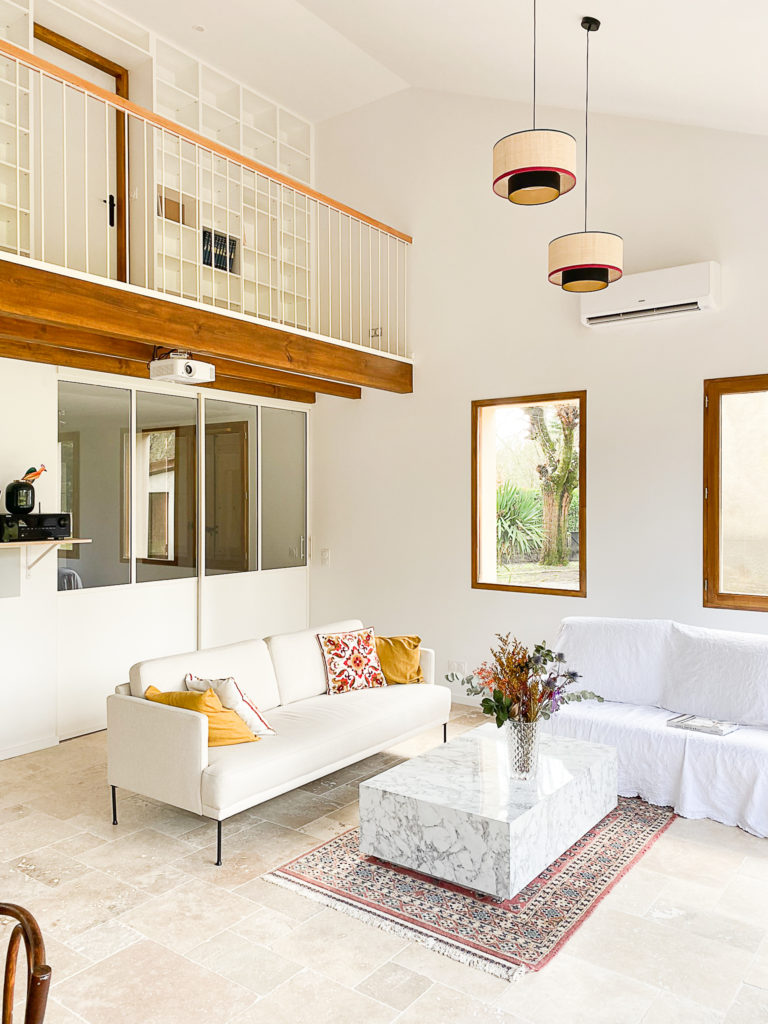
A l’intérieur, le blanc est venu jouer avec la lumière en fonction des orientations. L’idée d’une grande baie vitrée filant tout le long derrière les anciens colombages a fait échos aux lueurs de la forêt qui lui fait face. Elle laisse entrer le paysage dans le salon, la salle à manger et la suite parentale.
Tout est dans les tons de blanc et de bois foncé, sauf quelques touches de couleurs que l’on souhaitées plus vives comme la cuisine, pièce maitresse à l’entrée de la maison et son vert canard qui contraste avec le reste des meubles sur mesure.
Le dressing de l’entrée et la tête de lit de la chambre parentale révèle un accent vintage avec leur canage.
Chaque chambre possède son ambiance avec des papiers peints choisis méticuleusement (Isidor Leroy).
Les luminaires ont été ajustés sur mesure sur place, ils ont été sélectionnés chez Maison Sarah Lavoine.
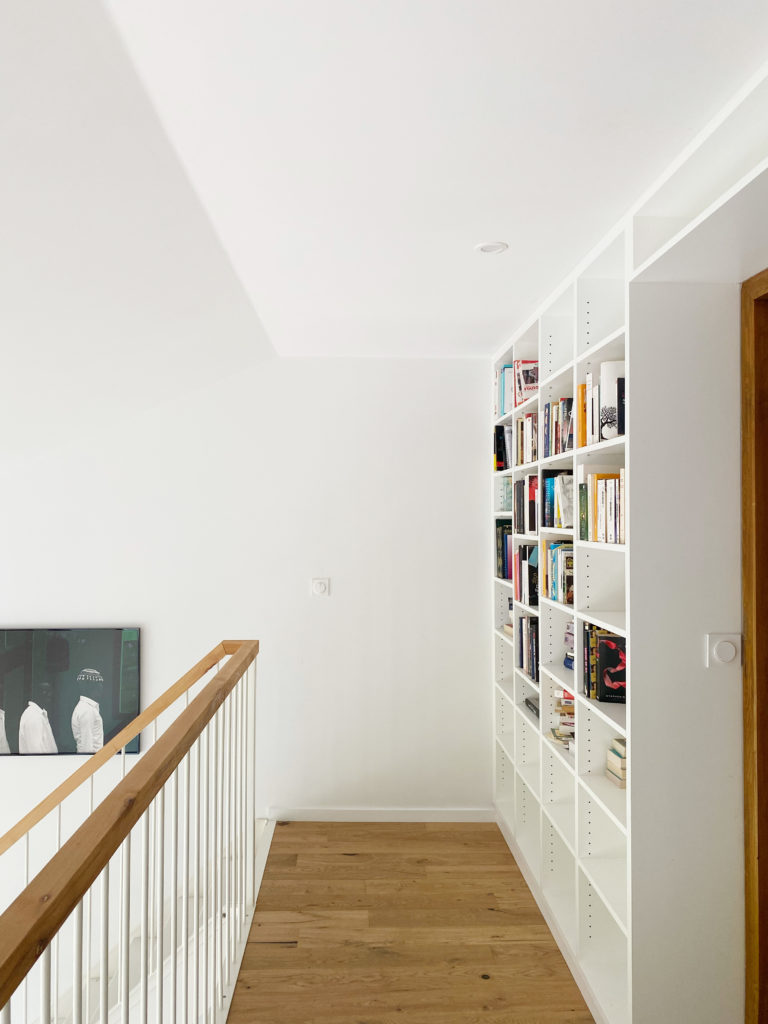
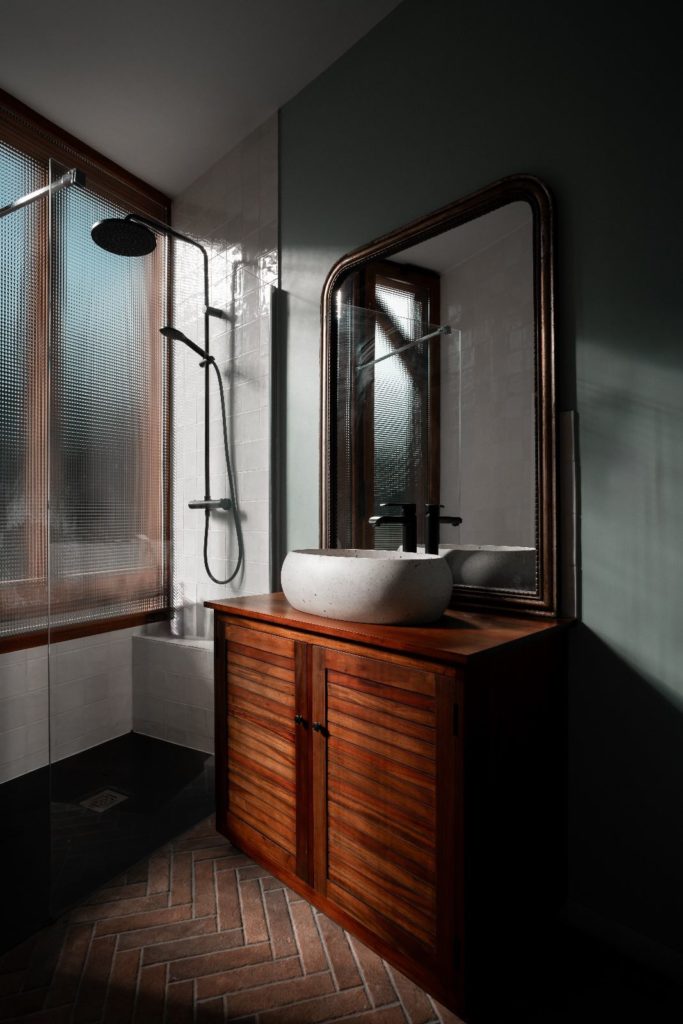
Cette ambiance à la fois moderne et conservatrice joue avec le choix des sols : tomettes, pose de carreaux terre cuite à bâton rompu et pierre de travertin sur tout le séjour. Elle joue aussi avec la verrière et l’escalier sur mesure, blanc immaculé, réalisés par un serrurier en atelier.
L’ensemble évoque la philosophie de l’atelier Senecio, tout à l’écoute d’une maîtrise d’ouvrage engagée et convaincu par une architecture respectueuse de son environnement et de son histoire.
EN :
Rooted in France, in the Landes region’s identity, the renovation of this four-house farmstead blends respect for heritage with nature. Half-timbering, cob, and local materials interact with the light and the surrounding forest. Phytopurification, natural tones, and traditional craftsmanship reflect a sustainable architecture, deeply embedded in the culture and landscape of the Landes. The project focused on rehabilitating this old house to minimize construction and demolition waste.
The objective was to establish expertise in reuse. Such expertise requires local craftsmanship, know-how, and a commitment to preserving our rural Landes heritage for housing. A circular economy approach was integrated into the project.
The renovation and extension project for this building is part of an approach to preserving the Landes identity, at the crossroads of local culture and the surrounding nature.
At the heart of a clearing comprised of four buildings, the ensemble illustrates the typical layout of Landes farms, opening onto a clearing shaded by oaks and pines. The renovated house, the oldest and most dilapidated, still bore the marks of time: weathered timber framing, a missing staircase, and wattle and daub infill – a mixture of earth and plant fibers – a testament to vernacular know-how. Respecting this built heritage, the project sought to reveal rather than transform.
The original proportions, the balance of volumes, and the nobility of the natural materials have been preserved. Wood, omnipresent, interacts with the light and mineral hues, asserting a restrained and timeless aesthetic. From an environmental perspective, the renovation is rooted in a sustainable approach with the creation of a constructed wetland wastewater treatment plant integrated into the landscape. Inspired by the functioning of wetlands, this system filters wastewater through reed-planted basins, offering an ecological and landscape-friendly solution in harmony with the spirit of the place. Light becomes a material in its own right. White reveals the volumes, while a continuous bay window opens onto the maritime pine forest, inviting the landscape into the house.
Local materials—solid wood, terracotta, local pebbles—and handcrafted details such as caning and herringbone tiles pay homage to the techniques of yesteryear. The colors evoke the landscape: duck egg green for the foliage, dark brown for the forest, and bright white for the sand and sky.
The custom-made staircases, woodwork, and workshop-style glass roof, crafted by local artisans, reinforce the spirit of handmade architecture, respectful of the landscape and the culture of the Landes region.